

As a supplier of electric scooters, I've witnessed firsthand the growing popularity of these eco - friendly and convenient vehicles. One of the most frequently asked questions by our customers is about the range of an electric scooter, that is, how far it can travel on a single charge. In this blog, I'll delve into the various factors that affect the range of an electric scooter.
Battery Capacity and Type
The battery is the heart of an electric scooter, and its capacity and type play a crucial role in determining the range. Battery capacity is typically measured in watt - hours (Wh). A higher watt - hour rating means the battery can store more energy, which generally translates to a longer range.
For instance, a scooter with a 300Wh battery will usually have a shorter range compared to one with a 500Wh battery, assuming all other factors are equal. Lithium - ion batteries are the most common type used in electric scooters due to their high energy density, long lifespan, and relatively low self - discharge rate. They offer better performance and range compared to lead - acid batteries, which are heavier and have a lower energy - to - weight ratio.
When we offer products like the 500W Electric Scooter with Seat, we ensure that it is equipped with a high - quality lithium - ion battery to provide an optimal range for our customers.
Motor Power
The power of the electric scooter's motor also impacts the range. A more powerful motor can provide greater acceleration and speed, but it also consumes more energy. If a scooter has a 1000W motor, it will draw more power from the battery compared to a 500W motor during operation.
However, the relationship between motor power and range is not always straightforward. In some cases, a more powerful motor can be more efficient at certain speeds and loads. For example, on hilly terrains, a high - power motor may be able to maintain a steady speed with less energy waste compared to a lower - power motor that has to work harder to climb the hills.
Our Electric Off Road Scooter for Adult is designed with a motor that balances power and energy consumption to offer a good range even on challenging off - road terrains.
Rider Weight
The weight of the rider is another significant factor. A heavier rider will require more energy for the scooter to move. When a scooter has to carry a 100 - kg rider, it has to work harder than when it is carrying a 50 - kg rider.
This increased workload means that the battery will drain faster, reducing the range. On average, for every additional 10 kg of rider weight, the range of an electric scooter can decrease by about 5 - 10%. Therefore, when promoting our scooters, we usually provide an estimated range based on an average rider weight.
Riding Style
The way a rider operates the electric scooter can have a substantial impact on its range. Aggressive riding, such as rapid acceleration and hard braking, consumes more energy. Every time the rider accelerates quickly, the motor draws a large amount of power from the battery. Similarly, hard braking wastes the kinetic energy that could have been used to move the scooter further.
On the other hand, smooth and consistent riding at a moderate speed is the most energy - efficient way to operate an electric scooter. By maintaining a steady speed and anticipating traffic conditions to avoid sudden stops and starts, riders can significantly extend the range of their scooters.
Terrain and Road Conditions
The terrain on which the electric scooter is ridden is a major determinant of its range. Riding on flat, smooth roads requires less energy compared to riding on hilly or rough terrains. When going uphill, the motor has to work harder to overcome gravity, which drains the battery faster.
Conversely, going downhill can actually recharge the battery to some extent through regenerative braking, where the kinetic energy of the scooter is converted back into electrical energy and stored in the battery. Also, rough roads with potholes and uneven surfaces increase the rolling resistance, making the scooter use more energy to move forward.
Tire Pressure and Type
Tire pressure and type are often overlooked factors but can have a notable impact on the range. Under - inflated tires increase the rolling resistance of the scooter. When the tires are not properly inflated, more energy is required to keep the scooter moving, which reduces the range.
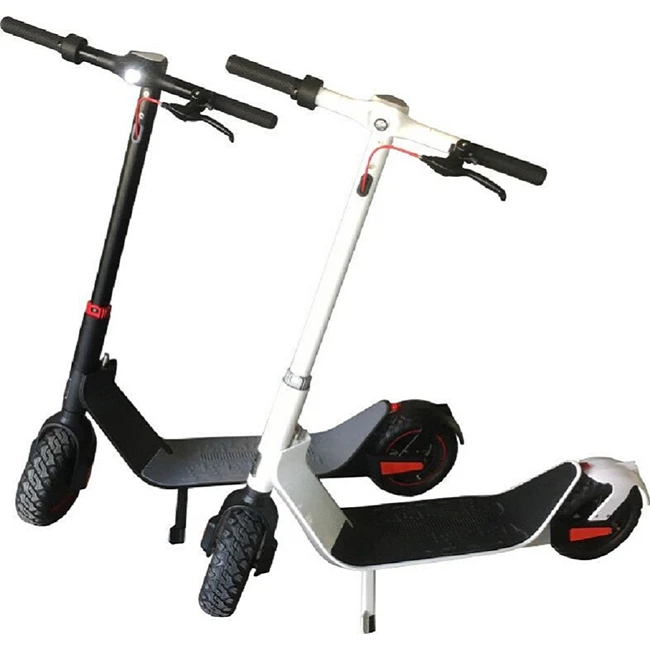
The type of tires also matters. For example, off - road tires with deep treads provide better traction on rough terrains but have higher rolling resistance compared to smooth - treaded tires designed for city riding. Maintaining the correct tire pressure and choosing the appropriate tire type for the intended riding conditions can help optimize the range of the electric scooter.
Weather Conditions
Weather conditions, especially temperature, can affect the performance of the battery and thus the range of the electric scooter. Extreme cold can reduce the battery's capacity and efficiency. In cold weather, the chemical reactions inside the battery slow down, which means it can store and deliver less energy.
On the other hand, extremely hot weather can also be detrimental to the battery. High temperatures can cause the battery to degrade faster and may even lead to overheating, which can damage the battery and reduce its lifespan and performance. It is recommended to store and charge the scooter's battery in a moderate temperature environment to maintain its optimal performance.
Accessories and Additional Loads
Any accessories or additional loads on the electric scooter can increase the energy consumption and reduce the range. For example, if a rider attaches a heavy cargo rack or a large basket to the scooter and fills it with items, the scooter has to work harder to move the extra weight.
Similarly, using accessories like lights, horns, and mobile chargers that draw power from the battery also contribute to a decrease in the range. Riders should consider the impact of these additional loads and accessories on the range when using their electric scooters.
Maintenance
Proper maintenance of the electric scooter is essential for maximizing its range. Regularly checking and maintaining the battery, motor, brakes, and tires can ensure that the scooter operates at its peak efficiency.
For the battery, following the manufacturer's charging instructions, such as avoiding over - charging and deep - discharging, can help prolong its lifespan and maintain its capacity. Keeping the motor clean and well - lubricated can reduce friction and energy losses. And as mentioned earlier, maintaining the correct tire pressure is crucial for minimizing rolling resistance.
In conclusion, the range of an electric scooter is influenced by a multitude of factors, from the battery and motor to the rider's behavior and the external environment. As a supplier, we strive to provide high - quality electric scooters like the Electric Scooter And Mini Bike that offer a good balance of performance and range.
If you are interested in our electric scooters and want to discuss the best options for your specific needs, we welcome you to contact us for procurement and further discussions. We are committed to providing you with the most suitable electric scooters that meet your requirements in terms of range, performance, and budget.
References
- Bansal, P., & Kockelman, K. M. (2017). Shared micromobility: Early evidence from the United States. Transportation Research Part A: Policy and Practice, 100, 103 - 123.
- Egbue, O., & Long, S. (2012). Barriers to widespread adoption of electric vehicles: An analysis of consumer attitudes and perceptions. Energy Policy, 48, 717 - 729.
- Wu, X., & Liu, X. (2016). A review on the key issues for lithium - ion battery management in electric vehicles. Journal of Power Sources, 329, 240 - 250.