

When it comes to outdoor adventures, hard shell roof top tents have become an increasingly popular choice for camping enthusiasts. These tents offer the convenience of easy setup and the protection of a durable hard shell, making them ideal for those who want to enjoy the great outdoors without sacrificing comfort. As a supplier of high - quality hard shell roof top tents, one of the most frequently asked questions we receive is about the maximum incline on which these tents can be placed.
Understanding the Basics of Hard Shell Roof Top Tents
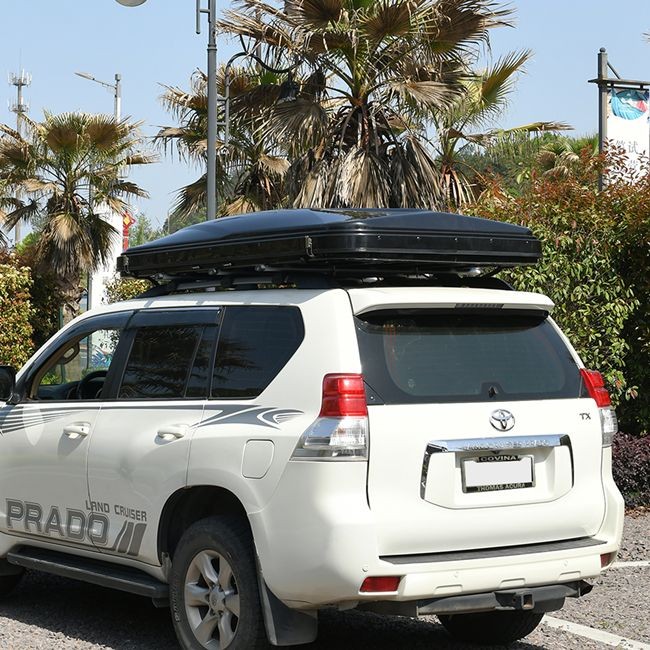
Before delving into the maximum incline, it's essential to understand the design and structure of hard shell roof top tents. Our ABS Shell Lightweight Rooftop Tent and Black Hardtop Rooftop Tent are crafted with precision and durability in mind. The hard shell is typically made of high - strength materials such as ABS plastic or fiberglass, which provides excellent protection against the elements, including rain, snow, and UV rays. Inside, the tents are equipped with comfortable sleeping quarters, often featuring foam mattresses and well - ventilated designs.
Factors Affecting the Maximum Incline
Several factors come into play when determining the maximum incline on which a hard shell roof top tent can be placed.
Structural Integrity
The structural design of the tent is a primary consideration. A well - engineered tent with a sturdy frame and a properly attached hard shell can withstand a certain degree of incline. For example, our BLACK Jeep Hardtop Rooftop Tent is built with a reinforced frame that distributes weight evenly across the tent. However, excessive incline can put stress on the joints and connections, potentially leading to damage over time.
Weight Distribution
The weight distribution within the tent also affects its stability on an incline. When the tent is occupied, the weight of the occupants and their gear needs to be evenly distributed. If most of the weight is concentrated on one side of the tent due to an incline, it can increase the risk of the tent tipping over. This is especially important when considering the maximum incline, as a steeper incline can exacerbate the uneven weight distribution.
Vehicle Compatibility
The type of vehicle on which the tent is mounted is another crucial factor. Different vehicles have different roof load capacities and center of gravity. A larger, more stable vehicle may be able to handle a tent on a steeper incline compared to a smaller, lighter vehicle. For instance, a full - size SUV with a wide track and a low center of gravity will generally provide a more stable base for the tent than a compact car.
Determining the Maximum Incline
Based on our extensive testing and experience, we generally recommend that hard shell roof top tents should not be placed on an incline greater than 10 - 15 degrees. This range ensures the safety and stability of the tent and its occupants. At a 10 - degree incline, the tent remains relatively level, and the weight distribution can be managed more effectively.
However, it's important to note that this is a general guideline, and the actual maximum incline may vary depending on the specific model of the tent and the vehicle it is mounted on. For example, some of our more robust models with enhanced structural features may be able to handle a slightly steeper incline, up to 20 degrees in certain conditions. But this should only be attempted after careful consideration and assessment of all the factors mentioned above.

Testing and Safety Precautions
Before attempting to place the tent on an incline, it's advisable to conduct a simple test. Park the vehicle on a gentle incline and observe the stability of the tent. Check for any signs of stress on the frame or the hard shell. Make sure that the tent door can still open and close smoothly, and that there are no unusual noises or vibrations.
When setting up the tent on an incline, always follow the manufacturer's instructions carefully. Ensure that the tent is properly secured to the vehicle's roof rack using the recommended mounting hardware. Additionally, it's a good idea to use leveling blocks or wedges to reduce the incline as much as possible.
Real - World Considerations
In real - world camping scenarios, finding a perfectly flat surface can be challenging. There may be times when you have to set up your tent on a slightly uneven ground. In such cases, it's important to use your judgment and prioritize safety. If the incline is too steep, it's better to look for an alternative location or try to level the ground as much as possible.
Conclusion
As a supplier of hard shell roof top tents, we are committed to providing our customers with high - quality products that offer both comfort and safety. While the maximum incline on which a hard shell roof top tent can be placed depends on several factors, a general guideline of 10 - 15 degrees is a good starting point. By understanding the structural integrity of the tent, managing weight distribution, and considering vehicle compatibility, you can ensure a safe and enjoyable camping experience.
If you're interested in purchasing a hard shell roof top tent or have any questions about our products, we encourage you to reach out to us for more information. Our team of experts is ready to assist you in finding the perfect tent for your outdoor adventures and can provide further guidance on setting it up safely.
References
- Outdoor Camping Equipment Handbook: A comprehensive guide to camping gear and safety.
- Vehicle Roof Rack Manufacturer's Manuals: For information on vehicle - specific load capacities and mounting requirements.
- Hard Shell Roof Top Tent Testing Reports: Based on internal and independent testing of our tent models.